Showing posts with label Mammal. Show all posts

Monday, February 27, 2012

Vampire Bat


True Wild Life | Vampire Bat | The vampire bat is a small species of bat, native to the tropics of Central and South America. There are three recognised sub-species of vampire bat, all of which are in a genus of their own despite their obvious similarities. The common vampire bat, the hairy-legged vampire bat and the white-winged vampire bat are all closely related and share the same unique feeding habits, as they are the only known mammals that feed entirely on blood. Over time, vampire bats have perfectly adapted to the consumption of their only food source, with a leaf-like heat sensor on the end of their nose which detects where the warm blood is flowing closest to the skin.


The vampire bat is quite a small animal, with it's body rarely growing larger than the size of a human thumb. It's wings are long, finger-like bones that are covered in a thin layer of skin, with a thumb claw that pokes out of the front and is used for grip when clambering about on their host. Vampire bats have dark brown to grey furry bodies with a lighter underside, and strong limbs which enable them to crawl about on the ground with ease. As with other bats, vampire bats use echolocation in order to determine their surroundings. When flying, they produce high-pitched sounds that bounce of the objects in the area, and it is this bounced-back sound that allows the bat to figure out where things are around them (it is so high-pitched that it cannot be heard by people).


Vampire bats use echolocation, sound and smell in order to find their prey, which can be up to 10,000 times the size of this tiny predator, and it is because of this that vampire bats have evolved to taking some precautions when feeding. Firstly, the never land on their prey but inside land on the ground close by and crawl up to it, where they are able to detect veins close to the skin's surface with precision, thanks to their heat-sensing nose. Using it's set of sharp front teeth, the vampire bat then bites it's host, immediately jumping back in case the animal wakes up. Contrary to popular belief, vampire bats do not suck the blood of their victims, but inside lap it up using their grooved tongue as it flows out of the wound. Chemicals in the vampire bat's saliva both stop the blood from clotting and numb the area of skin around the bite to prevent the host from feeling anything.


Despite being a unique and versatile predator itself, the vampire bat is still prey to other animals, that can hunt the bat in the air when it comes out to hunt at night. Large, sharp-eyed birds of prey such as hawks and eagles are the most common predators of the vampire bat, along with snakes that hunt the bats in their dark caverns while they are sleeping during the day. Humans though are one of their biggest threats, mainly farmers that are known to poison the bats that commonly feed on their livestock. These poisons (known as vampiricides) are specially designed to spread throughout the whole colony through social grooming, killing hundreds of individuals at a time.


Vampire bats feed exclusively on the blood of warm-blooded animals, drinking up to a teaspoon (25ml) of blood per 30 minute feed. Once having feasted on their host however, the bats are then so bloated that they can barely fly with their weight almost having doubled. It is said that in just one year, an average sized vampire bat colony can drink the blood of 25 cows, but their metabolism is so fast that they must feed every two days to ensure their survival (blood is very nutritious containing high amounts of water). The nearly 20 teeth in the bat's mouth are mostly redundant due to their liquid diet, apart from the set of razor-sharp incisors at the front used for biting flesh.


All three subspecies of vampire bat have been listed as being of Least Concern of becoming extinct in the wild in the immediate future, due to the fact that they are widespread and feed on a variety of warm-blooded animals. Deforestation of their natural habitats along with persistent human efforts to eradicate who colonies at a time however, have led to population declines in certain areas. Scientists have also discovered though that the anti-coagulant found in the bat's saliva, proves to more effective at preventing blood clotting than any medicine, meaning that this could have significant positive implications for patients with strokes or heart attacks.

Monday, February 13, 2012

Western Lowland Gorilla


True Wild Life | Western Lowland Gorilla | The western lowland gorilla is one of two subspecies of western gorilla (the other being the incredibly rare cross river gorilla) found in the jungles on the African continent. The western lowland gorilla is the most numerous species of western gorilla but is still considered to be critically endangered in the wild. The western lowland gorilla is found inhabiting the tropical jungles and forests of western and central Africa, along with lowland swamps and secondary forests. The western lowland gorilla is found throughout Angola, Cameroon, Central African Republic, Congo, Democratic Republic of the Congo, Equatorial Guinea and Gabon and is also the most likely gorilla to be seen in the world's zoos.


There are two separate sub-species of western gorilla which are the western lowland gorilla and the cross river gorilla. Although only slightly different in appearance, the two western gorilla species are distinguished by their differing skull and tooth sizes, and the cross river gorilla is also much rarer than the western lowland gorilla with only a handful thought to be left in the wild. The western lowland gorilla is one of the great apes, a group that includes orang-utans, gorillas, humans and chimpanzees. As with the other great apes, the western lowland gorilla has a number of features which makes living in the jungle a bit easier, including having opposable thumbs which come in handy when the western lowland gorilla is peeling fruit.


The western lowland gorilla is an omnivorous animal, but the majority of it's diet is made up of eating fruit which the western lowland gorilla is known to travel vast distances through the forests to find. The western lowland gorilla also eats leaves, nuts and berries, along with insects and occasionally small animals such as lizards and rodents. The western lowland gorilla has also been observed using basic tools in the wild in order to more effectively gather food. Due to it's large size, the western lowland gorilla has few real predators in it's native African forests, with large cats such as leopards and the odd crocodile being the only real natural threat to the western lowland gorilla. The biggest threat to the western lowland gorilla is habitat loss caused by deforestation and also being hunted by humans. Parts of the western lowland gorilla's territory have also been taken over by civil unrest in recent years, which, along with poaching, has had a truly devastating affect on wild populations.


The western lowland gorilla tends to live in groups which are led and protected by the alpha male. The alpha male western lowland gorilla also mates with the females in his group, producing generally single offspring, known as babies. The western lowland gorilla babies remain with their mother until they are a few years old and become independent. Today, the western lowland gorilla is classified as one of the world's critically endangered species with an estimated 95,000 western lowland gorilla individuals thought to be left in the jungles of Africa.

Sunday, February 5, 2012

White Tiger


True Wild Life | White Tiger | The white tigers originated in the pure Bengal strain in India. Later in captivity Siberian was crossed in to make a bigger more impressive white tiger. They do have some pigment, so they are not albinos. The white tiger has a shorter life expectancy than the orange tiger, thought to be due to the white tigers mutated genes and to the inbreeding depression necessary to perpetuate the bloodline. The white tiger was always rare to come across in the wild in India, and none have been seen in the wild for over 50 years. The gene that causes the background to be white is a simple recessive. For that reason to produce whites they must be mated either to other whites or to normal orange tigers that are carriers of the white gene. The white tiger has been known to give birth to an orange tiger when mated to an orange male. Cubs of both colors occur in the same litter.


White tigers have also sadly appealed to those who are rich who either display the white tiger in captivity or killed the white tigers for their fur. For that reason white tigers are no longer seen in the wild. All were captured for captive breeding programs or killed as trophies for rich hunters. It has been speculated that some white tiger individuals are born with a blue tinge to their black stripes. Although this has not been recorded, it is possible for a genetic mutation to occur diluting the black stripes of the white tiger a blue/gray color. This dilution of black to blue is common in horses, cats, and dogs.


As white tigers are simply a different coloured version of the normal orange tiger, there are very few differences (if any at all) in the white tiger's behaviour. The white tiger lived in a jungle habitat where there was plenty of cover for the white tiger to remain hidden and to keep on the look out for potential prey. However, they did tend to stand out against their backgrounds and did not camofluage as effectively as normal orange tigers


The tiger is a carnivorous mammal and a fearless predator hunting large mammals including deer, wild boar and cattle. Tigers are extremely stealthy animals and are able to sneak up on their prey and catch it off guard. This makes the tiger a ruthless and dominant predator within its environment. The tiger is a solitary animal and it requires a large territory in order to ensure that there is an adequate food supply. Tiger cubs remain with their mother until they are strong enough and experienced enough to hunt for themselves.

Thursday, January 19, 2012

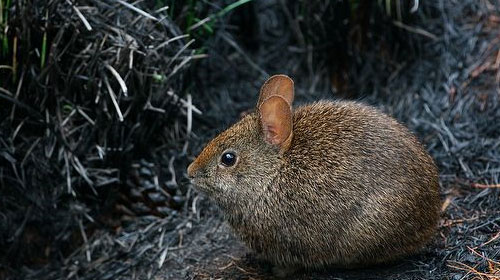
Volcano Rabbit


True Wild Life | Volcano Rabbit | The Volcano Rabbit also known as teporingo or zacatuche (Romerolagus diazi) is a small rabbit that resides in the mountains of Mexico. Volcano Rabbits are the second smallest rabbit in the world, only the pygmy rabbit is smaller.


The Volcano Rabbit lives at a high altitude of 3,000 meters above sea level. Grasslands have expanded into the highlands, making it difficult for the rabbit to find food and make their nest holes. Although the Volcano rabbits are not found outside of Mexico there are a handful of isolated populations away from the slopes of the volcanoes but these are very few and far between. The four volcano slopes where these unique rabbits reside are the Tlaloc, El Pelado, Iztaccihuatl and Popocatepetl volcano slopes. 


Volcano Rabbits make their nests deep in the grass. Not only do they eat the grass, but they also use it to hide from their enemies. Volcano Rabbits feed on zacaton grasses, herbs and the bark of alder trees. During the rainy season they will also eat corn and oats.


Volcano Rabbits breed throughout the year with a peak during the warm summer. After a gestation period of 38 - 40 days, they will give birth to 1 - 3 young. At birth the youngsters are covered in fur but their eyes are closed. They are weaned after approximately 20 days and they reach sexual maturity at 4 months old.


Another problem is that the Volcano Rabbits live on an active volcano. If this volcano were to erupt, it would wipe out their small population. So, zoos and preservation centers are working quickly to breed more Volcano Rabbits.

Thursday, January 12, 2012

African Wild Ass


True Wild Life | African Wild Ass | The African Wild Ass is a wild member of the horse family, Equidae. This species is believed to be the ancestor of the domestic donkey which is usually placed within the same species. They live in the deserts and other arid areas of northeastern Africa, in Eritrea, Ethiopia and Somalia; it formerly had a wider range north and west into Sudan, Egypt and Libya. About 570 individuals exist in the wild. The African Wild Ass is suited for life in the desert, capable of going on for up to three days without drinking water.


African wild asses are well suited to life in a desert or semidesert environment. They have tough digestive systems, which can break down desert vegetation and extract moisture from food efficiently. They can also go without water for a fairly long time. Their large ears give them an excellent sense of hearing and help in cooling. Because of the sparse vegetation in their environment wild asses live somewhat separated from each other (except for mothers and young), unlike the tightly grouped herds of wild horses. They have very loud voices, which can be heard for over 3 km, which helps them to keep in contact with other asses over the wide spaces of the desert.

The African Wild asses can run swiftly, almost as fast as a horse. However, unlike most hoofed mammals, their tendency is to not flee right away from a potentially dangerous situation, but to investigate first before deciding what to do. When they need to, they can defend themselves with kicks from both their front and hind legs. The African Wild Ass eats plant material, often eating thorn bushes and tougher plants that other animals ignore. They need to have water at least every three days, but they are able to survive on water that is dirty and brackish and can get a lot of their moisture from the plant material that they eat.


Sexual maturity of the female ass usually happens by the time she reaches two. Males can also reproduce at two, but it is so competitive that they usually are forced to wait until they are around four. Males are very territorial and will often hold a huge territory that is about 23 km, and they mark the edges of their territories with dung. Other males are allowed in, but they are kept away from the females as much as possible. Male donkeys will bray when the females are in season, and a dominant male of a territory has first right to breed with any female that comes around. The gestational period usually lasts 11-12 months, and the females in the wild usually give birth only once every two years. The young are weaned at about six months of age, and the animals can live approximately 40 years.


In addition to their struggle with domesticated livestock to secure food and water, the African Wild Ass also became a hunted animal for consumption and medicine. Many dangerous weapons found their way into the homeland of the African Wild Ass due to the war between Ethiopia and Eritrea. There is a concern that these weapons will be used more often from now on to hunt more of the African Wild Ass. Currently, there is a protection program in progress to move the African Wild Ass into a protected area of Israel.

Saturday, November 5, 2011

Snow Leopard


True Wild Life | Snow Leopard | The snow leopard  is a moderately large cat native to the mountain ranges of South Asia and Central Asia. Although sharing its name with the common leopard, the snow leopard is not believed to be closely related to the Leopard or the other members of the Pantherine group and is classified as the sole member of the genus Uncia uncia. The classification of this species has been subject to change and its exact taxonomic position will not be resolved until further studies are conducted.


Snow leopards live between 3,000 and 5,500 metres above sea level in the rocky mountain ranges of Central and South Asia. Their secretive nature means that their exact numbers are unknown, but it has been estimated that between 3,500 and 7,000 snow leopards exist in the wild and between 600 and 700 in zoos worldwide. 


Snow leopards are carnivores and actively hunt their prey, though, like all cats, they are opportunistic feeders, eating whatever meat they can find, including carrion and domestic livestock. The Snow Leopard eats goats, sheep, rabbits and birds. It can catch prey over 3 times its own weight!


At one time, the Snow Leopard was nearly hunted into disappearance for its fur. Its rare, beautiful fur could sell for a very high price. Now, conservation actions, for the Snow Leopard's numbers are slowly becoming popular. Sadly, the hunters kill the leopard for its fur, and some leopards are killed by people to protect domestic goats.

Iberian Lynx


True Wild Life | Iberian Lynx | The Iberian lynx also known as Spanish lynx is a critically endangered species native to the Iberian Peninsula in Southern Europe. It is one of the most endangered cat species in the world. The species used to be classified as a subspecies of the Eurasian Lynx, but is now considered a separate species. Both species occurred together in central Europe in the Pleistocene epoch, being separated by habitat choice. Iberian lynx resembles other species of lynx, with a short tail, tufted ears and a ruff of fur beneath the chin. Iberian lynx has leopard-like spots with a coat that is often light grey or various shades of light brownish-yellow. The coat is also noticeably shorter than in other lynxes, which are typically adapted to colder environments.


In spite of its strong resemblance to the Eurasian Lynx, the Iberian Lynx has a smaller body and the facial features of a house cat. Iberian lynx typically hunts smaller animals, usually no larger than hares. It also differs in habitat choice, with Iberian lynx inhabiting open scrub and Eurasian lynx inhabiting forests.


The Iberian Lynx must really like rabbit because it accounts for an amazing 80% of their diet. They also eat young deer and duck. At one time, rabbits disappeared due to an epidemic outbreak and the number of Iberian Lynx plummeted. This is because rabbits are its main food. Today, development continues to destroy forest environments and could trigger another decline in rabbits. If that happens, it will cause irreparable damage to the already scarce population of Iberian Lynx.


There are only a few forests in Spain and Portugal where the remaining Iberian Lynx live, making them one of the most critically endangered species of the Felidae family. Forest development is one of the main reasons they have become so rare. Their habitat has diminished and they live sporadically due to roads and towns being built in the forest. Further damage comes from poachers who continue to violate bans on their hunting.

Friday, September 2, 2011

Przewalski's Horse


True Wild Life | Przewalski's Horse | The Przewalski's Horse is the only remaining wild horse still surviving in the world. Once, it became extinct because it was hunted or it lost in the feeding frenzy with farm animals. Przewalski's Horse is a rare and endangered subspecies of wild horse  native to the steppes of central Asia, specifically China and Mongolia. At one time extinct in the wild, it has been reintroduced to its native habitat in Mongolia at the Khustain Nuruu National Park, Takhin Tal Nature Reserve and Khomiin Tal.


In the wild, Przewalski's Horses live in social groups consisting of a dominant stallion, a dominant lead mare, other mares, and their offspring. The patterns of their daily lives exhibit horse behavior similar to that of feral horse herds. Each group has a well-defined home range; within the range, the herd travels between three and six miles a day, spending time grazing, drinking, using salt licks and dozing. At night, the herd clusters and sleeps for about four hours. Ranges of different herds may overlap without conflict, as the stallions are more protective of their mares than their territory.


With a short, muscular body, Przewalski’s horses are smaller than most domesticated horses. They have a pale belly and beige to reddish-brown coat that is short during summer and thicker and longer in winter. Their muzzle is white, and they don an erect and dark mane that lines their large head and neck. They stand about 12 to 14 hands tall at the shoulder, or about 48 to 56 inches (122 to 142 centimeters), and weigh about 440 to 750 pounds (200 to 340 kilograms). While extant in the wild, these horses ate grasses and other vegetation on the steppe, shrublands, and plains of western Mongolia and northern China.


In the 1960s, Przewalski's Horses disappeared once. They were hunted for their meat and hide. Others lost in the feeding frenzy with farm horses. In the 1990s, a project started to return Przewalski's Horses to the wild. Zoos in Europe raised Przewalski's Horses and returned them to wildlife sanctuaries in hometown, Mongolia, and the number of Przewalski's Horses in the wild is starting to increase, little by little.

Mountain Zebra


True Wild Life | Mountain Zebra | The Mountain Zebra is an endangered species of equid native to south-western Angola, Namibia and South Africa. It has two subspecies, the Cape Mountain Zebra  and Hartmann's Mountain Zebra, though it has been suggested these should be considered separate species. Like all zebras, it is boldly striped in black and white and no two individuals look exactly alike. The stripe can be black and white or dark brown and white. Their stripes cover their whole bodies except for their bellies. The Mountain zebra also has a dewlap.


As its name suggests, the Mountain Zebra lives in higher places than other zebras. Its numbers are decreasing because of hunting for its skin and meat, and also because of droughts. Mountain Zebras are found on mountain slopes, open grasslands, woodlands and areas with sufficient vegetation. Some Mountain Zebras live in the rainforest. Mountain zebras live in hot, dry, rocky, mountainous and hilly habitats. They prefer slopes and plateaus and can be found as high as 1,000 metres above sea level, although they do migrate lower in the winter season. Their diet consists of tufted grass, bark, leaves, buds, fruit and roots. They often dig for ground water.


Mountain zebra are most active in the early morning and late afternoon. They spend up to half of the daylight hours feeding. Mountain zebra live in herds consisting of one adult male (stallion), one to five adult females (mares) and their young. The stallion is the dominant member of the herd. Sometimes herds come together to form temporary groups of up to 30 individuals. Mountain zebra never form the large herds characteristic of Plains zebra, however, they do exhibit a harem-type social system. During the winter they move up to 20 kilometres from a water source. Where they are in danger of being hunted, Mountain zebra water at night, however, when they are not in danger of being hunted, they water at any time.


The Mountain zebras form small family groups consisting of a single stallion, one, two, or several mares, and their recent offspring. Bachelor males live in separate groups and attempt to abduct young mares and are opposed by the stallion. Mountain zebra groups do not aggregate into large herds like Plains zebras. Mares may give birth to one foal every twelve months. Like other equids, zebra foals are able to stand, walk and suckle shortly after they are born. The mare nurses the foal for up to a year, and the young zebra then leave to join bachelor groups or harems.


The Mountain Zebra lives in higher places than any other zebra. It lives in two different locations in southwestern Africa and South Africa. The biggest threat to Mountain Zebras is hunting by people. These animals have long been hunted for their beautifully patterned skins and meat. The Mountain Zebras that live in South Africa have nearly been wiped out twice in the past.

Wednesday, August 24, 2011

Grevy's Zebra


True Wild Life | Grevy's Zebra | The Grevy's zebra , also known as the Imperial zebra, is the largest extant wild equid and one of three species of zebra, the other two being the plains zebra and the mountain zebra. The Grevy's zebra is found in Kenya and Ethiopia. Compared with other zebras, it is tall, has large ears, and its stripes are narrower. It is more ass-like in appearance as compared to other zebras, which are more horse-like. Among their kinds who were hunted for their hides, Grevy's Zebra is the largest kind of zebra. The Grevy's Zebra's pattern is like a painting, so it is called the most beautiful of zebras. However, its beauty is its sadness, because it is hunted for its hide. Its numbers keep becoming lower and lower.


Grevy's zebras grow up to nine feet long, weigh up to 990 pounds, and stand up to almost five and a half feet at the shoulder. On average, males are about ten percent larger than females. Big heads, large and rounded ears, and thick, erect manes make the Grevy's zebra appear more mule-like than other zebras. In fact, many experts consider Grevy's zebras to be striped asses that are not closely related to other zebras. Their coats sport dazzling narrow stripes that wrap around each other in a concentric pattern and are bisected by a black stripe running down the spine. Grevy's Zebra is hunted for its beautiful hide and so it has had a shocking drop in numbers.


Males are highly territorial, claiming prime watering and grazing areas with piles of dung called middens. They generally live alone in their territories, except when females move through during mating season. Non-territorial males travel together in groups of two to six animals. This social system differs from that of other zebras, which typically form female harems that live in one male's territory all year. During dry months, many Grevy's zebras migrate to greener mountain pastures, but males on prime territories often remain there year-round. Grevy's zebras inhabit semi-desert areas, including arid grasslands and dusty acacia savannas. The most suitable areas have water year-round.


Normally only one foal is born to a female after a gestation period of thirteen months. Most of the babies are born between May and August. The young zebra has brown stripes and a mane which stretches from the shoulder to the tail. The background colour of the foal's coat is light brown instead of white. This protective colouring helps the foal to "freeze" and blend instantly with its background. The foal can stand on its feet within one hour of its birth and can run with the herd after only a few hours - this gives it a much better chance of escaping from predators, usually lions. Young males leave the herd when they are about two years old and join bachelor herds. Eventually they will collect mares to form their own new herds or perhaps challenge old or weak stallions and take over their herd.


Today, the surviving wild Grevy's Zebras are protected in national parks. The Grevy's Zebra has other things to worry about. Domesticated animals are growing in number, and the grass that the zebra eats has been taken away. Its living space is also disappearing because people are building. Experts speculate there are only around 1,900 to 2,500 wild Grevey's Zebras left.

Tuesday, August 23, 2011

Asian Wild Ass

 
True Wild Life | Asian Wild Ass | The Asian Wild Ass was once considered to be among the largest population of ungulates, along with horses, cows, camels, and deer. Herds of 1,000 or more Asian Wild Asses have often been observed in Central and West Asia. Like many other large grazing animals, the asian wild ass' range has contracted greatly under the pressures of hunting and habitat loss, and of the six subspecies, one is extinct and two are endangered. The kiang , a Tibetan relative, was previously considered to be a subspecies of the asian wild ass as E. hemionus kiang, but recent molecular studies indicate that it is a distinct species. 


Asian Wild Ass are a little larger than donkeys at about 290 kilograms  and 2.1 metres , and are a little more horse-like. They are short-legged compared to horses, and their coloring varies depending on the season. They are generally reddish-brown in color during the summer, becoming yellowish-brown in the winter months. They have a black stripe bordered in white that extends down the middle of the back. They are notoriously untameable.


The Asian Wild Ass lives in the grasslands and deserts of Central and West Asia.Most people associate a donkey with a slow moving animal, but the Asian Wild Ass is one of the fastest running asses in the horse family. They can run 70 kilometers or more per hour in short spurts.


Today, the Asian Wild Ass is on the brink of extinction. This is partially due to the expansion of grazing land. Livestock animals have taken over their grassland and watering areas. But it is also because of an expansion of farmlands which has shrunk their habitat and forced them to separate. No longer is it possible to see herds of 1,000 asses. Conservation efforts have helped them recover their population in some areas, but as a whole, the Asian Wild Ass is still an endangered species.